

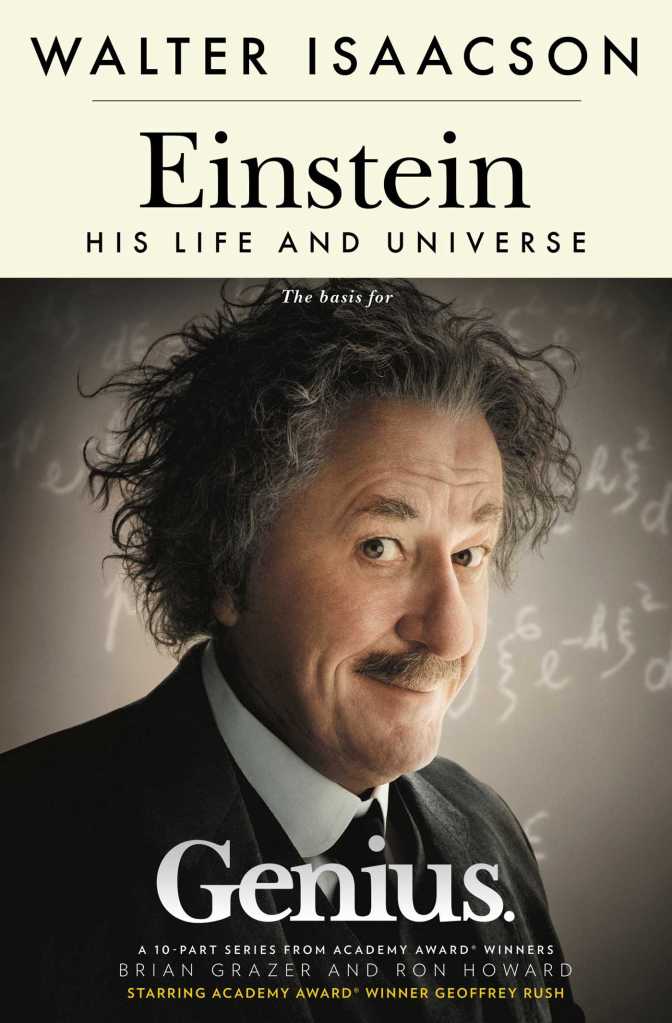
“Life is like riding a bicycle. To keep your balance you must keep moving.” A quote by a man whose sheer determination and passion contributed to our modern understanding of the world. After reading Isaacson’s book “Einstein: His Life and Universe”, I am even more inspired by Einstein’s creativity and ability to think abstractly. This book explores his personal life, greatest discoveries, and how he got there.
We often associate the word genius with Einstein and undeniably his intelligence should be celebrated. But one key takeaway from this book is that his creativity and imagination were the true drivers behind his work. I am in awe of his ability to think abstractly, and with the help of his colleagues he was able to mathematically prove his theories. Einstein knew this was instrumental to his success, as he publicly advocated for freedom and creativity which he believed is crucial to one’s learning.
Isaacson explores Einstein’s political beliefs which developed later in his life. Having lived through two World Wars and in times of oppression, Einstein advocated for equal rights, and the freedom to voice one’s thoughts. These beliefs contributed to Einstein moving between countries and having multiple passports, before finally settling in the United States of America.
Isaacson tells Einstein’s story, highlighting both his family life, scientific endeavours and fame. This wealth of information provided a great insight into Einstein’s personality. His humble, genuine and charismatic characteristics touched the lives of many individuals. He was both assertive in his work, and openly admitted when he was wrong. Despite Einstein disproving some of Newton’s work, his personal traits allowed his work to be heard and accepted by the scientific community.
Isaacson’s research involved countless letters, news articles and books to compile Einstein’s life. An intriguing part of his life included the Manhattan Project, in which his level of involvement was revealed. The author exposed Einstein’s true feelings about the project, but it was evident that the media misportrayed his involvement at the time.
Einstein’s biography provides a deeper understanding of the man we often learn about in the classroom. It is fascinating to learn the stories that led to his discoveries, and personal struggles he encountered. Isaacson has done a fabulous job of displaying Einstein’s inner thoughts. While Einstein utilised his creativity in science, we can learn that creativity and imagination are the foundations of human development in any field.
Are you interested in learning more by reading this book?
 Books for Thought