

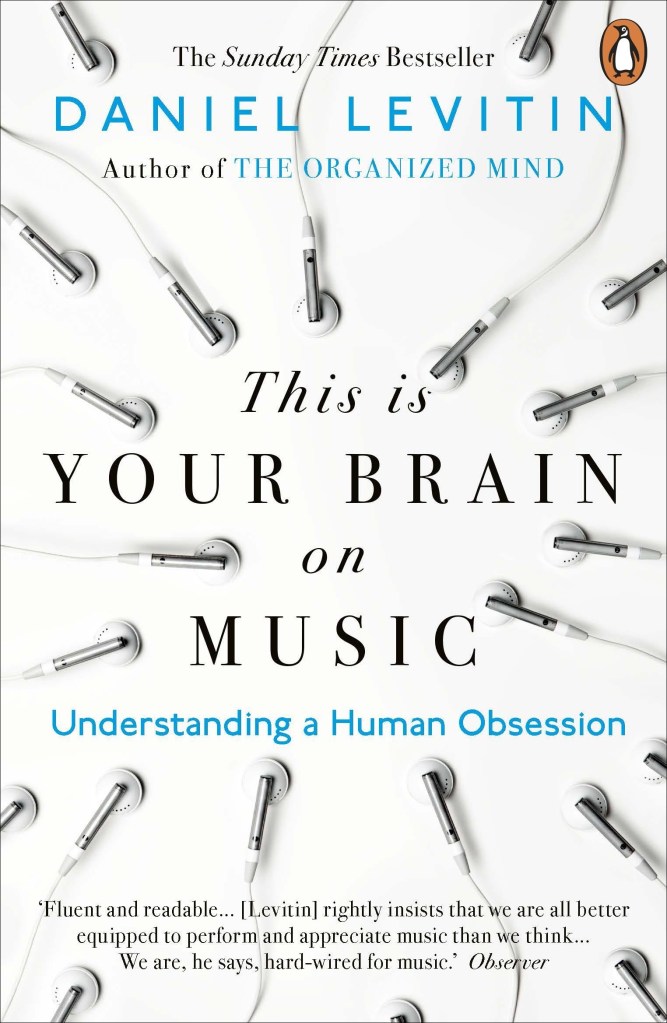
What is music? How and why does it evoke emotion? Are musical abilities innate to everyone, or does practice make perfect? Why do we lean towards specific genres? What makes an exceptional song? Daniel Levitin seamlessly integrates musical theory, neuroscience and psychology to answer these questions and much more in his book “This Is Your Brain On Music”.
Levitin describes music as organised sound composed of many elements, whereas ‘good music’ is organised in a particular way. He starts the book with musical theory and terminology in layman’s terms, appreciating how music is formed and how elements are assembled to create the songs we enjoy. It was fascinating to learn how music is perceived in different cultures, and the level of impact that our upbringing can have on musical interests and talents.
While neuroscience has revealed that our brains have an identifiable structure, each brain’s connections are unique and built from our genetic make-up and life experiences. Levitin explains how our brain interprets the world, and divides it into the mind (psychological) and brain (physiological). This structure effectively maps out the connections between music and our brains, explaining how it can influence our feelings, emotions and take us on internal journeys.
Understanding the brain is about mapping neural connections. Different aspects of music activate regions of the brain in different ways. There are elements of music such as tempo, rhythm and pitch which can trigger emotions or memories. Genres can be associated with our childhood exposure, or specific song preferences can be linked to certain memories. These factors can also be attributed to genetic characteristics which are activated by our environments. Music will often cause a chain of events in our brain, stimulating our senses and affecting our state of being.
Levitin provides examples where songs can influence us negatively because of external factors associated with the song. For example we may dislike the artist or first heard the song at a low point in our lives, and consequently dislike it. This book highlights the confluence between our brain and music, and the significant influences of external stimuli on many aspects of our consciousness.
If you are not scientifically inclined, some sections of the book may be out of your depth. Personally, I am not apt for music and the book’s musical theory required a slow and steady approach to comprehend it effectively. In saying this, understanding music and its origins unlocks a new world beyond the sounds of the radio. Levitin’s book is organised in an engaging manner and I would recommend it to anyone curious about how music affects your brain.
Are you interested in learning more by reading this book?
 Books for Thought