

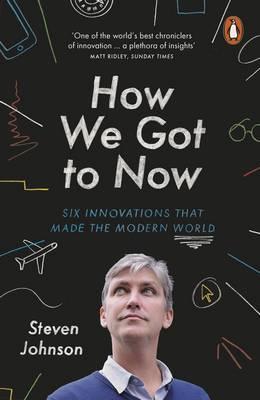
Have you ever stopped to wonder how your dishwasher was invented? Obviously it was not built overnight, it was innovated through evolving necessities and continual developments. Steven Johnson outlines “How We Got to Now: [With] Six Innovations That Made the Modern World”, and shows how big ideas are consolidated through smaller, incremental breakthroughs.
Johnson focuses on six key areas, namely glass, cold, sound, clean, time and light. All of these items have been in existence for millennia in some shape or form, but it was not until someone discovered their capabilities that humans could fully utilise their potential. Johnson concentrates on their ancient origins and the progression of scientific breakthroughs. This promotes an appreciation for the evolution of modern technology.
Each chapter tells a story, and Johnson acknowledges that this is just one story of how we got to today. He focuses on North America and Europe, given that “the story of how China or Brazil got to now would be a different one”. While many of the innovations may have seemed insignificant at the time, they were usually a crucial turning point towards discovering the unknown. This book highlights that we don’t often reflect on the history and origins of what we have in front of us. Johnson points out that by looking back on the path we have already taken, we can effectively draw the next path for future innovations.
In addition to innovative technologies, our societies are transformed as our cultures develop alongside these breakthroughs. Johnson draws links between the discovery of glass and computers, or how sound transmission cultivated cultures and accelerated globalisation. There is also the connection between the evolution of artificial light and sleeping habits, or how flash photography brought about social reform. These outcomes are unforeseen when technologies are invented. Johnson explains the wide ranging effects that a simple invention can have on society.
From discovering bacteria to eradicating diseases, and the invention of glass leading to a reading revolution, it’s hard to imagine the impacts that modern innovations can have far into the future. Johnson’s book is a narrative which only captures a glimpse of human’s innovative developments, but draws on hidden links that are important to uncover. I would recommend his book to anyone curious as to how scientific discoveries have resulted in how we live today.
Are you interested in learning more by reading this book?
 Books for Thought