

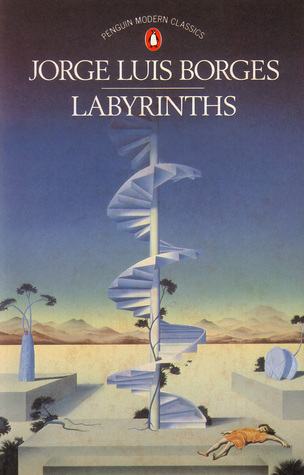
Life is merely a perception of our reality, and it often takes something abstract to question it. Jorge Luis Borges is a well-travelled Argentinian author who plays with philosophical ideas and the laws of physics. His book ‘Labyrinths’ is a collection of short stories and other writings that may evoke doubts on your perception of reality. Borges also questions the structure of language and challenges typical writing styles.
There were a number of short stories that stuck out for me, and challenged my reality. ‘Library of Babel’, for example, described an infinite library identifying every possible combination of letters to form words, paragraphs and chapters – creating an infinite series of books. This story highlights the extent of possible literature that is yet to be written. This concept can be applied abstractly to other domains of one’s life, such as the certain combination of decisions that can lead to divergent outcomes.
In ‘The Immortal’, Borges plays with the idea of immortality and investigates this as a concept that could be redefined. One quote that resonated with me was, “To be immortal is commonplace; except for man, all creatures are immortal, for they are ignorant of death; what is divine, terrible, incomprehensible, is to know that one is immortal.” What does it really mean to be immortal? Is it only defined as living an eternal life? But then what elements constitute life?
The perception of reality is further explored through the confluence of dreams and reality in Borges’ story ‘The Zahir’. The Zahir is a person or object that enables an individual to enter a dream state, whereby the usual laws of reality do not apply. Eventually the individual enters this dream like state of consciousness while awake. This convergence allows the individual to enter an idealistic philosophy where “to live and to dream are synonymous”. This state of mind provides insight into how we perceive our life within the structures of our social and physical environment.
While much of Borges’ writing was immensely deep and thought provoking, there were a number of short stories difficult to comprehend. Borges made many references to international writers and literature which I am unfamiliar with, and links to political or historical events in countries such as Argentina and Spain. My lack of context in these cases inhibited my ability to understand the message.
I am grateful for being introduced to ‘Labyrinths’ because it opened my eyes to the potential in untranslated international writers. Imagine the abundance of marvellous literature that has not been translated into your spoken language. Borges’ writing stemmed from his extensive reading into literature, both old and new, reaching far and wide. His thoughts are articulated perfectly into stories rather than complex theories. I would recommend his writing to anyone that would like to explore philosophy, language and our physical world beyond the academic literature.
Are you interested in learning more by reading this book?
 Books for Thought
To me, reading Borges can be a challenge — since much of his stories are dense. But the reading is really rewarding. The stories resonate with me, as I think about them after reading them.
LikeLike
I completely agree! It requires close concentration. But even now I am still thinking about the abstract concepts presented in his stories and how it applies to life.
LikeLiked by 1 person