

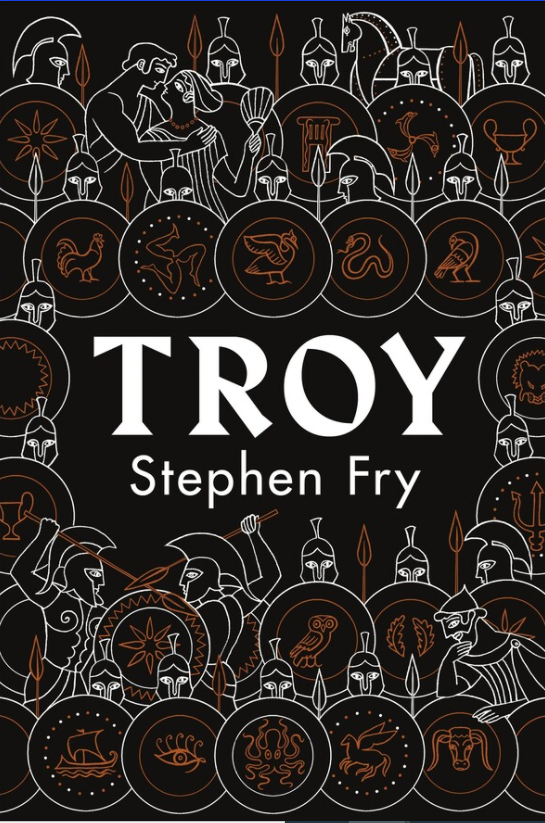
Nearly everyone has heard of the ancient city of Troy and the story of the Trojan Horse. The story of the Trojan War was narrated through many pieces of Greek literature, but primarily told in the Iliad by the poet Homer over 2000 years ago. Despite many translations from ancient Greek, Stephen Fry retells the famous legend in his book “Troy” with great use of accessible language, in comparison to the Iliad’s complex wording.
If you have limited knowledge of Greek mythology, the book starts with an uninspiring tone, as the fast paced introduction of many characters is confusing. But once the scene is set, the story develops, and the characters’ personas are revealed. As the relationships between the gods are uncovered, a complicated family tree is exposed.
The story of Troy is filled with action from all angles; characters having multiple lovers, a war spanning years, killing for love, and fighting for justice and integrity. The Greeks took pride in their triumphs to be remembered for eternity. This theme is prominent for many characters, but mainly Achilles, as he chooses between being remembered forever, or living a normal family life. The book ends with the art of deception, with the Greeks using the gift of the Trojan Horse to conquer Troy. The story of Troy continues to be relevant with the use of common phrases such as ‘beware of Greeks bearing gifts’ and describing a weak spot as the ‘Achilles’ heel’.
Myth or history? Fry has added appendices with his thoughts on the truth behind the myths, and questions how the gods were incorporated into the stories. There is historical evidence to indicate that the Trojan War may have occurred, but there are discrepancies between the physical artefacts and Homer’s account. Fry also raises the likelihood that Homer simply re-told the story from oral recounts. In these stories, Greek mythological figures were considered to walk the earth just as humans. The evidence suggests that Homer simply re-told a mythological version of the Trojan War, adding to its poetic nature. It is possible that the Greek mythological figures were metaphors or explanations for naturally occurring events that we now understand with modern science.
Whether Greek mythology is fiction or history, these stories have stood the testament of time. The legend of the Troy is still engaging with its dramatic scenes in the name of fate, morality and love. Fry has done a brilliant job of capturing the essence of the story while incorporating modern language. I am looking forward to reading his other books “Mythos” and “Heroes”, further exploring Greek mythology.
Are you interested in reading this book?
 Books for Thought