

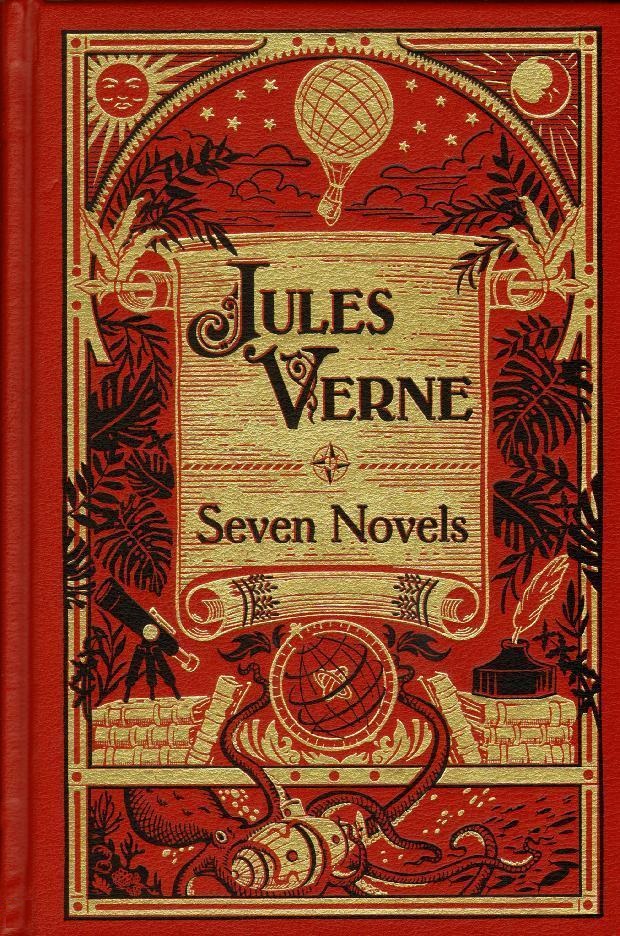
Have you ever wondered what it would be like to spend five weeks in a hot air balloon? Well, Jules Verne definitely did in 1863 when his classic, ‘Five Weeks in a Balloon’ was first published. The book captures the adventure of a scholar, an explorer and a servant, who float through Africa in a hot air balloon in pursuit of exploration. This exciting story not only keeps you engaged, but also highlights humanity’s dramatic developments since the book’s publication.
The trio’s adventure through Africa entails encounters with the natural environment, local inhabitants, and the resulting issues with their balloon. This insight into exploration in the late 1800s demonstrates the technological limitations of the time and cultural differences from today. Travel by balloon was the only form of air transportation during this period and was considered exciting, almost today’s equivalent to travelling into space. It’s evident that modern technology increases our accessibility to information and people, and minimises uncertainty in our day-to-day lives.
The book shows that the perception of native cultures within Africa, and treatment towards wild animals has developed since then. With the book featuring derogatory references towards native people of various African countries, it’s apparent how much racial equality has moved in the right direction, but there is still much progress to be made. The trio also took joy in the hunting of majestic animals, as it was once considered acceptable. This contrasts to contemporary society where there are many known issues with hunting, such as extinction, animal cruelty, and destruction of ecosystems.
Verne’s character recounts historical expeditions through the African continent, and references geographical locations as they were known during this period. These remarks throughout the book give continual context as the story develops. It also provides a historical insight into the world’s developments during the 19th century. The geopolitical situation has since changed with the advent of independence movements, which led to a dramatic shift in the borders we see today.
The English used is naturally different to what we read and write today. It was interesting to see the use of English words I rarely or never see, while other words had different connotations. Reading this book in 2020 offers a new insight, raising themes that were not considered relevant in 1863. After overcoming the English used, it’s an enjoyable story for anyone who daydreams of adventure.
Are you interested in reading this book?
 Books for Thought