

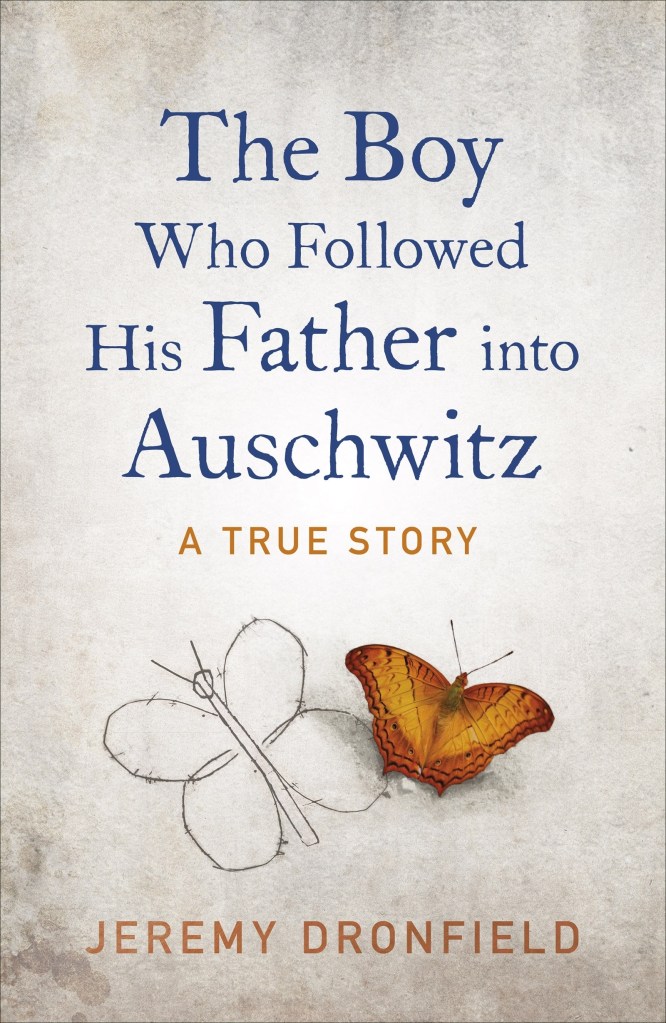
Can you imagine waking up every day in constant fear for your life, with barely enough strength to lift yourself from bed, sent to heavy manual labour, all on a small ration of bread? Many of us have heard countless stories from the Holocaust and the incredible tales of survival, but author Jeremy Dronfield does a great job at transporting you to this period, in his book ‘The Boy Who Followed His Father into Auschwitz.’
The book retells the true story of the Kleinman family, Jewish citizens of Vienna, and more specifically the story of father and son, Gustav and Fritz. Dronfield was lucky to have the diary of Gustav and Fritz’s memoir to retell their story of sheer courage and determination to survive inside numerous concentration camps. The author also conducted significant research through interviews with family members, and articles printed at the time.
Dronfield movingly recaptured the emotional journey that so many individuals endured. He showed just how the Jewish people were tricked into believing they were being moved for a better life, but in fact they were to be sent to their death.
The Kleinman’s story would make many of us appreciate the life we have, not having to live in these unimaginable conditions. The inner strength and risks taken by the Jewish people in a will to survive, help you understand what people do in times of desperation. Their comradery is a great testament to strength in numbers.
Having visited Auschwitz myself, it provided some context to the buildings and rooms that were described in the recounts of the Kleinman family. Reading their story, and imagining the series of events taking place in what I saw is incomprehensible. It makes their story an even more sobering read. There are many other tragedies around the world, with killings taking place on large scales. The commemoration of Holocaust stories has brought to light the severity of such actions, and encourages other stories to be told.
The book starts off slowly as Dronfield is introducing the historical context, and makes less direct references to the Kleinman family. As the book develops he does a great job at capturing the footsteps and emotions of father and son, with references to Gustav’s diary used with powerful effect.
Are you interested in reading this book?
 Books for Thought