

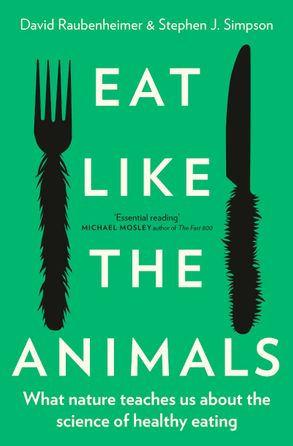
Have you ever wondered why it’s so difficult to get your diet right? After researching the diets of a range of animals, scientists David Raubenheimer and Stephen Simpson found that animals always seem to eat a balanced diet, while humans struggle to get it right. In their book ‘Eat Like the Animals: What nature teaches us about the science of healthy living’, they describe the factors that have led to this human shortfall.
It’s important to note that hunger is stimulated by separate appetites for protein, carbs, fat, sodium and calcium, known as the Big Five. Foods also contain many other key micronutrients such as vitamins and minerals, giving us the correct balance of nutrients in our diet.
Raubenheimer and Simpson’s experiments start with tracking the eating habits of locusts, which showed their selective appetite for different foods to ensure balanced levels of fat, protein and carbs in their diet. These experiments were carried out on many animals, including cockroaches, web spiders, flies, and orangutans, some in the laboratory and others in their natural habitats.
The authors pointed out that modern issues with obesity and related diseases stem from the prevalence of ultra-processed foods, which are highly processed and manufactured. Human history has progressed from a hunter gatherer lifestyle to agricultural, which has influenced diets. But Simpson explained how modern society’s shift towards processed foods came to his attention after living off grid with indigenous tribes.
Our protein and energy requirements shift according to lifestyle and different stages of life. Raubenheimer and Simpson describe the link between compulsive eating and processed foods due to a lack of nutritional value. Along with sugar cravings and a quick fix for energy, the authors touch on clever marketing strategies used by large corporations to misguide the public into thinking these processed foods are healthy.
The book gives a great understanding of why our bodies crave food, and how processed foods can incorrectly fill that hunger. Given that the book is written by two scientists, the first half was somewhat technical in nature and I often got lost in the details. The book developed in the second half, with the authors sharing relatable stories and giving context to their experiments and findings. These stories were the sections that stuck in my mind. I believe that something can be said of learning from animals and ultimately our natural environment, and that this method of research can be applied to other facets of our life.
Are you interested in learning more by reading this book?
 Books for Thought