
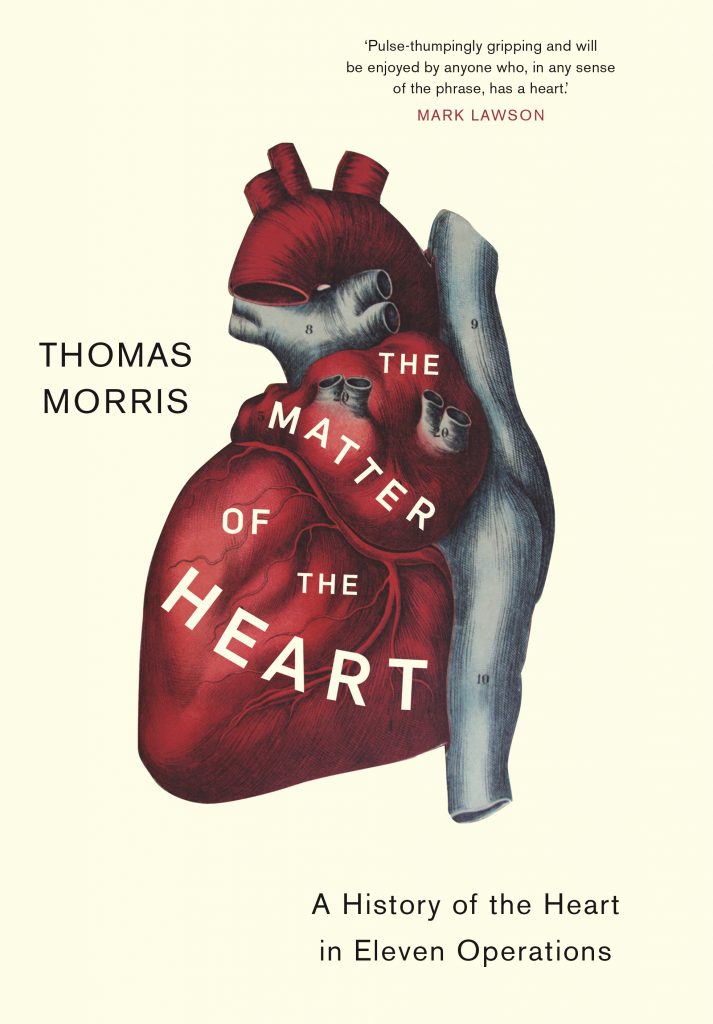
The Matter of the Heart – you may be imagining a love story, but this book is dedicated to an essential part of our body. Thomas Morris tells the story of eleven operations during the 1900s that have allowed heart surgery to progress to where it is today. This book was intriguing as I learnt about historic heart surgeries that are now considered normal practice, as well as an insight into the potential future of heart surgery.
While this book is filled with a wealth of knowledge for anyone interested in medical science, it also taught me about the importance of failure, trial and error, and that suffering will occur for positive development to take effect in this world. Today heart transplants, pacemakers, and open heart surgery are something that we take for granted, but less than 100 years ago these innovations were not possible. These innovations have developed during times of necessity that require perseverance such as treating injured soldiers during the world wars. In the same vein, the current Covid-19 pandemic will force changes in our lifestyle, society and medical science.
This book has demonstrated the importance in the development of ideas, and that there is not always a direct path. For example, less than 100 years ago, open heart surgery was very limited and near impossible due to the difficultly in working on a beating heart. Over the years, surgeons tried several ideas with varying successes. This includes cooling the body which slowed down the natural heart rate, the use of general anesthetic, using a live adult’s heart to pump blood into their child’s body during surgery, and the development of a heart-lung bypass machine. But today open heart surgery is becoming less necessary with the use of a catheter inserted through veins in the groin to reach the heart. These developments took many iterations, learning from other’s mistakes, intense animal testing, and human lives lost.
The use of the catheter in the vein has revolutionized countless surgeries. It was actually inspired by a movie in the 60s called the Fantastic Voyage, which depicted a mini submarine travelling through the veins of a human being. This idea still inspires the medical profession with the dream of one day having a microscopic vessel travelling through the human body to carry out medical treatment.
The discovery of stimulating the heart with electricity has saved millions of lives. This discovery led to the iterative development of the pacemaker which is now a small implantable device, supporting a person for a lifetime. I found it amusing that it wasn’t until 1960, after the discovery of electricity’s use on hearts, that someone realised manual force can be used to revive a heart’s rhythm, now known as CPR.
Throughout history the heart has always been at the center of existence, with its association to love and its ability to sustain life. With the development of heart transplants and technology, brain dead donors were often kept breathing on ventilators until their heart was ready to be used. This generated controversy regarding how to declare a patient medically dead. If there is no brain activity, but the heart is still pumping with assistance of a ventilator, is the patient still alive?
While there had been major developments in heart surgeries, with many more emerging, surgeons are still trying to perfect the little things that can improve the outcome of a heart surgery. For example in Bangalore, India in 2004, the first open heart surgery without general anesthetic was conducted. Progress like this, can reduce the risk of post-operative complications, and still save lives.
This book proves that these small improvements may seem minor at the time, but history has demonstrated that they can lead to meaningful change. It’s important to acknowledge that this principle can be applied to many other aspects of personal life, society, science and technology.
Are you interested in learning more by reading this book?
 Books for Thought